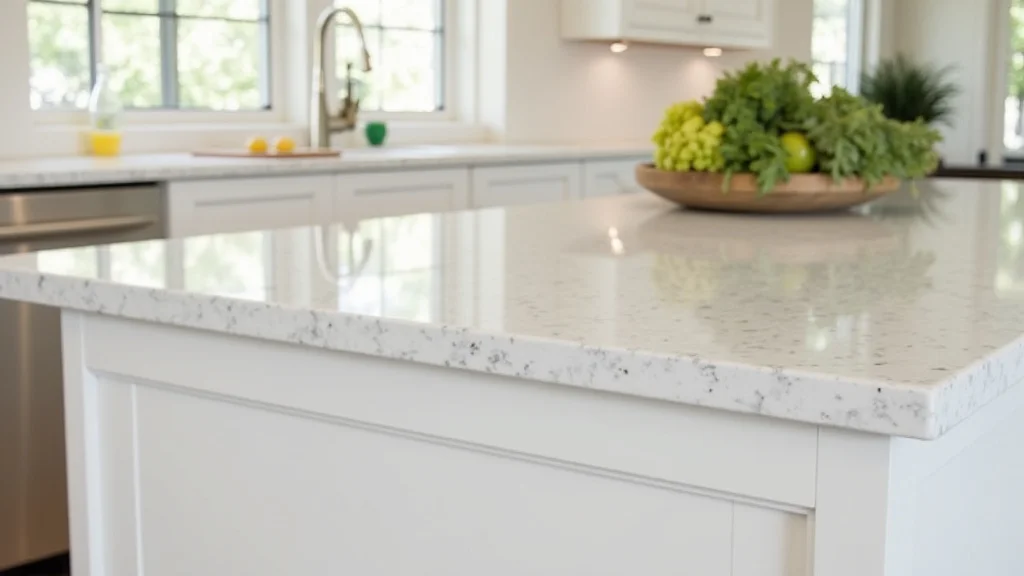
Remember that time you tried to bake a cake, but the measurements were off, and it ended up… well, let’s just say it wasn’t pretty? Measuring for new countertops can feel a bit like that – a small mistake can lead to a big headache (and a very expensive one). This guide will help you master the art of measuring countertops, ensuring your kitchen or bathroom renovation goes smoothly. We’ll cover everything from essential tools to tricky angles, equipping you with the knowledge to get the job done right. Prepare to gain confidence and avoid costly errors, improving your experience and reducing the chances of a frustrating project.
Gathering Your Tools: The Essentials for Precise Measurements
Before you even think about picking up a measuring tape, you need the right tools. Think of it like a painter needing brushes – without them, the job is impossible. Having the correct equipment guarantees precision, efficiency, and saves you time (and frustration). Using the right tools is the first step in ensuring your countertop measurements are spot-on. This section ensures you have everything you need before you begin.
Essential Measuring Tools You’ll Need
-
Measuring Tape: This is your primary tool, and a good quality one is essential. Look for a tape with clear markings and a sturdy case. Choose a tape measure with a blade length long enough for your longest countertop run. The best types have a “standout” of at least 10 feet. This means the tape can extend that far without bending significantly. Many pros use tape measures that are 25 or 30 feet long. Some measuring tapes have a magnetic tip, which is handy when measuring around metal appliances.
-
Pencil and Paper: You need these to record your measurements. Use a sharp pencil and a notepad to write down every dimension clearly. Make sure the paper is durable enough to withstand being in a work environment. Use a consistent format to make the measurement process easy to understand later on. Many prefer graph paper to quickly sketch their countertop layout.
-
Level: A level ensures that your countertops are installed correctly. A level helps you determine if surfaces are straight, guaranteeing a professional finish. It allows you to check for any unevenness or slopes. Look for a level at least 4 feet long for accurate measurements. Using a level prevents your countertops from looking crooked after installation.
-
Angle Finder (or Protractor): These are key for those odd corners or angles. These tools allow you to determine the exact angle of any corners or edges that are not standard 90-degree angles. A digital angle finder gives a reading, while a protractor is a template with degree markers. This tool is especially key when you have custom cabinetry or unique architectural elements. Without it, you might end up with countertops that don’t fit.
-
Straightedge: A straightedge ensures you’re measuring in a straight line. This can be anything from a long, straight board to a metal ruler. It’s critical for situations where the wall is not perfectly straight. A straightedge allows you to extend lines, ensuring that your measurements are correct, even when the surface itself is imperfect. Place the straightedge along the edge of the countertop to help guarantee a true line during measuring and cutting.
Taking Accurate Measurements: A Detailed Guide
Now that you’ve got your tools, it’s time to start measuring. This can seem difficult at first, but with practice, it becomes easy. This section will walk you through each step, covering common challenges and how to handle them. We’ll explore methods for measuring straight runs, angles, and cutouts, ensuring your new countertops fit perfectly. Proper measurements are important to a successful project.
Measuring Straight Runs: The Foundation of Your Countertop
This is where you start – measuring the basic lengths of your countertop runs. This involves measuring the length, width, and any overhangs. Consistency is key, so double-check all your measurements. Start at one end of the counter and extend your tape measure to the other end. Read and record the dimensions carefully, paying close attention to detail. This process lays the foundation for all other measurements. It’s the most common type of measurement.
-
Measure the Length: Determine the total length of each countertop section. Use your tape measure to stretch along the longest edge. Note the measurement at both ends, making sure the tape is straight and tight. Remember to account for any overhangs that will extend beyond the cabinets. Always double-check your measurements to avoid errors.
-
Measure the Width: Measure the width of the countertop at several points. This helps identify if the cabinets or walls are uneven. Take the measurement from the wall to the front edge of the countertop. Write down the largest measurement and the smallest measurement you find. If there are variations, note them. Be sure to measure the countertop in multiple spots.
-
Account for Overhangs: Note the overhangs on all sides. This is the part of the countertop that extends beyond the cabinet. Standard overhangs are usually 1 to 1.5 inches. Measure the overhang from the edge of the cabinet to the edge of the countertop. Write down these measurements for each side of the countertop where there’s an overhang.
-
Verify Dimensions: Before moving on, double-check all your length and width measurements. Comparing each measurement against others and making sure the information makes sense can avoid common mistakes. Write each measurement clearly, and label it with the location it represents.
Measuring Angles and Corners: Tackling the Tricky Parts
Corners and angles can be challenging, but they’re manageable with the correct approach. These measurements are key when your kitchen or bathroom has non-90-degree corners. You can use tools like angle finders or protractors to determine the exact angles, as a standard tape measure is not designed for this type of work. The key is to be precise and to double-check your readings. Taking the time to properly measure angles and corners will prevent major issues later on.
-
Measuring Square Corners (90 Degrees): These are usually the easiest. Simply measure the length and width as outlined earlier. Ensure the sides form a 90-degree angle using a square or a framing square. It is important to confirm the angle is correct before you take measurements.
-
Measuring Non-Square Corners: Use an angle finder or protractor. Place the angle finder in the corner and lock it to read the angle. Transfer this angle to your drawing. Alternatively, measure the lengths of the walls forming the angle, and then measure the distance across the corner. This will give you all the information you need to draw the corner accurately.
-
Dealing with Uneven Walls: Walls are sometimes not straight. Measure from a reference point (like the face of a cabinet) to several points along the wall. These measurements will help you create a template for the countertop manufacturer. This allows them to create a countertop that fits the space.
-
Using Templates for Complex Shapes: For especially tricky angles or curves, make a template. Use cardboard or heavy paper, and cut it to the exact shape of the countertop area. Transfer the shape to your countertop material, and then cut it out. This method is effective when a room has unusual shapes or when a custom countertop is required.
Measuring for Cutouts: Sinks, Stovetops, and More
Cutouts are areas that need to be removed from the countertop to accommodate sinks, stovetops, and other fixtures. Accurate cutout measurements are important for ensuring everything fits properly and functions as intended. Inaccurate cutouts can make the countertop useless. Cutout measurements require precision, so take your time and be very careful when recording the measurements.
-
Sink Cutouts: Measure the length and width of the sink opening. Add these measurements to the position of the sink relative to the edges of the countertop. Most sinks come with a template you can use to outline the cutout. Verify the template’s dimensions before cutting, making sure it corresponds with your measurements.
-
Stovetop Cutouts: Follow the manufacturer’s instructions for the stovetop cutout. Stovetop manufacturers provide templates with exact dimensions. Measure the distance from the edges of the countertop to the edge of the cutout. Accurate dimensions prevent gaps and guarantee a safe installation.
-
Faucet and Other Fixture Cutouts: Measure the diameter and position of faucet holes and any other fixtures. Precise measurements here are key to ensuring that all the components fit together. If the fixtures are not yet on hand, try to get their dimensions from the manufacturer to ensure accuracy.
-
Using Templates for Complex Cutouts: If the cutout shape is complex, use a template. Trace the outline of the fixture onto the countertop surface. Use a template to accurately mark the area for cutting. This method ensures your cutouts are the correct size and shape.
Common Mistakes to Avoid
Even skilled DIYers can make mistakes. Recognizing these common pitfalls can help you avoid costly errors. It is also important to double-check everything at every stage. Reviewing your work prevents mistakes and guarantees you get a countertop that fits your space. Taking a little extra time and being vigilant can save a lot of problems later on.
-
Not Double-Checking Measurements: The most common mistake is failing to double-check. Always measure twice (or even three times) before cutting. This is the most crucial step in preventing errors.
-
Ignoring Uneven Surfaces: Failing to account for uneven walls or floors. Uneven surfaces can throw off measurements. Use a level and measure at multiple points. This allows for adjustments during installation.
-
Using the Wrong Tools: Using tools incorrectly, or not having the correct tools for the task. This leads to inaccurate measurements and can ruin your project. Always confirm the right tools are available, and use them as intended.
-
Forgetting About Overhangs: Not including overhangs in your measurements. Overhangs are important for the aesthetic and functional aspects of the countertop. Remember to add these to your calculations for the overall countertop dimensions. Always consider overhangs at the start of the project.
Real-Life Examples and Scenarios
Sometimes, the best way to learn is by looking at examples. These real-life cases illustrate the impact of accurate measurements. Practical examples can help solidify your understanding and show you how to apply the principles we’ve discussed. Understanding the application of these measurement techniques can prevent many issues.
-
Example 1: The Misaligned Sink: A homeowner measured a sink cutout incorrectly, resulting in a gap between the sink and the countertop. The homeowner didn’t use the sink template correctly, leading to a half-inch mistake. This required a new countertop and extra labor costs.
-
Example 2: The Angled Wall: A homeowner measured a kitchen with an angled wall, but only measured the straight-line distance. The new countertop didn’t fit properly. The homeowner realized they should have used an angle finder and noted the wall’s variances. The countertop had to be custom cut and adjusted to fit.
-
Example 3: The Oven’s Secret: A homeowner didn’t measure the distance to the oven accurately. The countertop was installed and it wouldn’t fit. The homeowner didn’t account for the overhang and the placement of the stove.
Frequently Asked Questions
Question: What’s the best type of measuring tape to use?
Answer: A steel measuring tape with a blade length of at least 25 feet is recommended, especially for large countertops. Look for one with clear markings and a sturdy case.
Question: How do I measure a corner that isn’t a perfect 90-degree angle?
Answer: Use an angle finder or a protractor to accurately measure the angle. You can also measure the lengths of the walls forming the corner and the distance across the corner.
Question: What do I do if the wall isn’t straight?
Answer: Measure from a fixed point (like the front of a cabinet) to several points along the wall. These measurements will help you create a template or provide detailed instructions for the countertop manufacturer.
Question: How important is it to double-check my measurements?
Answer: Extremely. Double-checking measurements can prevent costly mistakes. Always measure twice (or more) before making any cuts or placing an order.
Question: What are typical countertop overhangs?
Answer: Standard overhangs are usually 1 to 1.5 inches, but the amount depends on the countertop material and personal preference. The standard overhang at a breakfast bar is 12 inches for comfortable seating.
Final Thoughts
Now, you have a solid understanding of how to measure countertops. You know the essential tools, and the methods for handling different situations, from straight runs to tricky angles and cutouts. The real key to success is preparation, precision, and the willingness to double-check your work. Accurate measurements are the foundation for a successful countertop project. Now you have the expertise to get your countertops installed correctly. So, grab your tools, take your time, and measure with confidence. With this knowledge, you can approach your project with assurance. Best of luck!
About the Author